
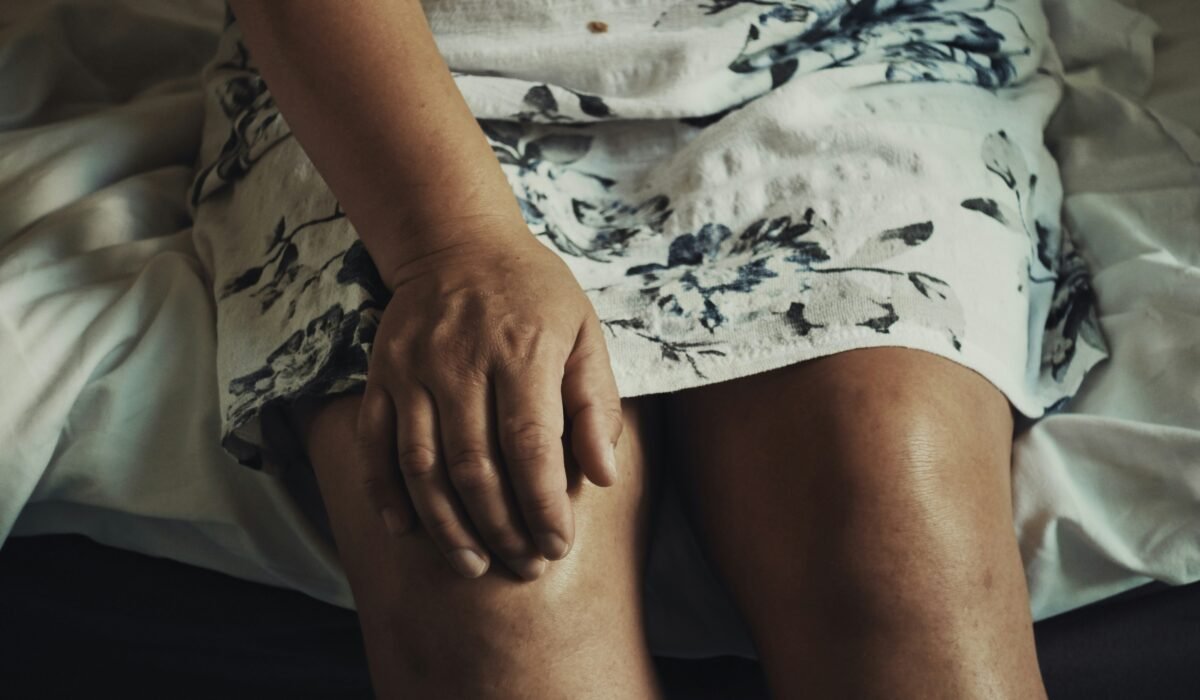
A bad knee does not put you on the sidelines permanently. What it does is change which exercises you do, how you approach each session, and the sequence in which you progress. Getting that wrong leads to more pain and slower recovery. Getting it right accelerates healing, rebuilds the muscle that supports the joint, and often reduces pain more effectively than rest alone.
This is the thing most people with knee pain get backwards. They stop moving to protect the knee, which causes the surrounding muscles to weaken, which puts more load on the joint itself, which increases pain. Physical therapists at the NHS, Harvard Health, Hospital for Special Surgery, plus major orthopaedic centres consistently point to the same conclusion: controlled movement is better than rest for almost every common knee condition.
That said, the exercises that work depend significantly on what is wrong with your knee. Osteoarthritis, patellofemoral syndrome, meniscus issues, plus patellar tendinitis each call for different approaches, and what helps one condition can aggravate another. This guide covers the science, the specific exercises and progressions, and the movements to avoid entirely.
One firm note before continuing: if your pain came from an acute injury, if you cannot bear weight on the knee at all, or if swelling is severe and does not reduce with rest and ice, see a doctor or physiotherapist before attempting any exercise programme. The exercises here are appropriate for chronic and sub-acute knee pain, not fresh injuries.
The Quick Rundown
- Weak quadriceps are the single biggest predictor of knee pain and progression. An 8-week quadriceps strengthening programme has been shown in a randomised controlled trial to reduce pain and improve quality of life in knee osteoarthritis patients. Strengthening the quads is typically the first clinical priority.
- Hip and glute strength matters as much as quad strength for knee health. A meta-analysis of 14 clinical trials covering 673 participants found that hip plus knee strengthening outperforms knee strengthening alone for reducing patellofemoral pain. Weak glutes let the knee collapse inward, generating enormous stress on the joint.
- The 0-5 pain rule keeps exercise safe. Rate your pain from 0 to 10 during exercise. Staying at 5 or below is acceptable and often means you are doing productive work. Pain above 5 is a signal to modify or stop.
- Swelling around the knee neurologically inhibits the quadriceps. This is called arthrogenic muscle inhibition. Exercises that work the quads without loading the knee (quad sets, straight leg raises) are the clinical starting point because the standard quad exercises feel impossible when swelling is present.
- Water exercise allows movements impossible on land. Water reduces effective body weight by up to 90 percent in chest-deep water. People can perform squats, lunges, and leg raises in the pool that they cannot tolerate on land, building the muscle support that eventually makes land-based training possible.
- Open kinetic chain exercises (foot free to move) are gentler on inflamed joints. Straight leg raises, seated leg extensions, and clam shells generate minimal compressive force on the knee while still building the supporting muscles.
- You can do a full upper body and core workout with zero knee loading. Bench press, rows, pull-ups, shoulder press, seated cable work, and plank variations do not involve the knee joint. A complete fitness programme is possible while the knee is recovering.
- Exercises to avoid entirely include deep squats past 90 degrees, high-impact jumping, and running on hard surfaces. These generate joint reaction forces of 4 to 8 times body weight through the patellofemoral joint.
Why Your Knee Condition Changes Which Exercises You Choose
Most exercise guides for bad knees treat all knee pain as a single thing. That is a mistake. The exercises that help a 60-year-old with osteoarthritis differ from those appropriate for a 30-year-old with runner’s knee, and differ again from what someone with a partial meniscus tear should be doing.
Knee Osteoarthritis
Osteoarthritis involves cartilage breakdown and bone-on-bone friction at the joint surfaces. The primary exercise goals are reducing load on the joint while building the muscle that supports it. Low-impact aerobic exercise reduces inflammation and helps maintain range of motion. Strength work rebuilds the quadriceps and hamstrings that absorb load the cartilage no longer can.
A 2024 network meta-analysis published in Frontiers in Medicine, covering 41 randomised controlled trials with 2,251 participants, confirmed that isotonic exercises (ones with full range of motion) produced the best outcomes for pain reduction, physical function, plus muscle strength gains in osteoarthritis patients compared to isometric or isokinetic-only approaches.
The exercises to approach cautiously with osteoarthritis: full squats, lunges with deep knee flexion, and any running on concrete. These multiply the compressive force through already-degraded joint surfaces.
Patellofemoral Pain Syndrome
Patellofemoral pain syndrome (PFPS), commonly called runner’s knee, produces pain around and behind the kneecap. It is driven by the kneecap tracking incorrectly in its groove, typically because the quad muscles are imbalanced or hip abductors are too weak to keep the knee from collapsing inward.
The research here is unusually clear. A 2018 systematic review and meta-analysis in the Journal of Orthopaedic and Sports Physical Therapy reviewed 14 trials covering 673 participants. Hip and knee strengthening combined was significantly more effective at reducing pain than knee strengthening alone. Strengthening the hip abductors (via clamshells, side-lying hip raises) and hip extensors (glute bridges, single-leg deadlifts) is now considered standard treatment for PFPS alongside quad work.
For PFPS, avoid anything that pushes the kneecap deeply into the groove: deep squats, lunges that extend the knee far forward past the toes, cycling with the seat too low, and stairs taken two at a time under load.
Meniscus Issues
Meniscus injuries range from small degenerative tears (common in middle-aged adults, often painless) to acute tears from twisting injuries. Exercise guidance varies considerably based on severity.
For mild degenerative meniscus issues without locking or giving way, most of the exercises in this article are appropriate. Compression and rotation are the main movements to limit. Avoid deep squatting that compresses the joint at end range, and avoid pivoting or twisting on a planted foot.
For recent acute tears, wait for clearance from a clinician before loading the knee at all. Once cleared, quad sets and straight leg raises are typically the starting point, progressing gradually to pool-based exercise before land-based loading returns.
Patellar Tendinitis
Patellar tendinitis (inflammation or degeneration of the patellar tendon just below the kneecap) is aggravated by loading the tendon under tension. That includes squats, jumping, lunges, plus running. The counterintuitive treatment involves eccentric loading of the tendon at low intensity, done slowly, which the research supports for tendinopathy rehabilitation.
For active tendinitis, avoid any plyometric or jumping exercise. Isometric exercises that generate force without joint movement (wall sits, isometric leg press) have been shown to reduce tendon pain in the short term, likely by reducing cortical inhibition.
The Foundation Exercises for Bad Knees
These are appropriate across nearly all knee conditions. They build the muscular support the knee depends on while generating minimal compressive force through the joint.
Quad Sets
This is the starting point for almost every knee rehabilitation programme, and it deserves more attention than it receives in most fitness articles.
Lying flat on your back with both legs extended, tighten the thigh muscle of the affected leg by pushing the back of your knee down into the surface below. Hold for 5 to 10 seconds, then relax completely. Two sets of 10 repetitions is the standard clinical starting dose.
The reason this exercise exists is arthrogenic muscle inhibition. When fluid builds up around the knee joint from inflammation or injury, the brain neurologically inhibits the quadriceps to protect the joint. The result is that even if you try to contract the quad, you cannot generate full force. Quad sets re-establish that neural connection before any weight-bearing exercise begins. Patients who skip this step and jump straight to squats often find the squats produce pain and poor form, because the quad cannot activate properly.
Straight Leg Raises
Lie on your back with one leg bent at the knee (foot flat on the floor) and the other extended. Tighten the thigh of the straight leg, then lift it off the ground to the height of the bent knee. Hold for 3 to 5 seconds, lower slowly.
This exercise works the quadriceps and hip flexors without any knee bending. For acutely painful knees where even gentle bending is uncomfortable, it provides meaningful quad loading without joint compression. Do 2 sets of 10 repetitions on each leg. As strength improves, ankle weights of 1 to 2 kg extend the challenge without changing the joint load.
Heel Slides
Lying flat, slowly slide the heel of the affected leg toward your buttocks, bending the knee as far as is comfortable, then slide it back. This restores and maintains range of motion in the joint, preventing the stiffness that comes from unloaded rest.
The NHS recommends holding the bent position for 2 seconds before returning. Pain should stay below a 5 out of 10 during the movement. If a particular range is consistently painful, stop just short of that point and work to that limit over days and weeks as mobility improves.
Clam Shells
Lie on your side with knees bent at 90 degrees and feet together. Keeping your feet touching, rotate your top knee upward as far as comfortable, then lower. This isolates the gluteus medius on the side of the hip, one of the primary muscles responsible for keeping the knee tracking correctly.
The Physiopedia clinical review on patellofemoral pain confirms that weakness of the hip abductors and external rotators is consistently associated with knee valgus (inward knee collapse) and the development of PFPS. Clam shells are a direct intervention on that weakness. Two sets of 15 repetitions per side is an appropriate starting volume. Adding a resistance band above the knees when the exercise becomes easy increases gluteus medius activation significantly.
Glute Bridges
Lie on your back with knees bent and feet flat on the floor, roughly hip-width apart. Press through both heels to lift the hips until the body forms a straight line, shoulders to knees. Squeeze the glutes at the top, hold for 2 seconds, then lower.
Glute bridges develop the gluteus maximus and hamstrings without placing the knee under compressive load. They are safe for virtually all knee conditions because the knee is in a fixed position throughout and bears no weight. Progressing to single-leg glute bridges (one foot lifted off the ground) doubles the demand on the working glute while also training hip stability.
Wall Slides (Wall Squats)
Stand with your back against a wall, feet 12 to 18 inches away. Slide your back down the wall until your thighs are at 30 to 45 degrees from vertical. Do not go beyond 45 degrees initially, as deeper angles increase patellofemoral compression substantially.
Hold this position for 10 to 30 seconds, then slide back up. This isometric exercise loads the quadriceps and glutes without repetitive knee movement, which is particularly useful for patellar tendinitis and early osteoarthritis rehabilitation. The Cleveland Clinic recommends this movement specifically for runner’s knee, progressing the hold duration before increasing the knee angle.
Seated Leg Extensions (Short Arc)
Sitting upright, extend one leg to fully straight, hold for 3 seconds, then lower slowly. This is fundamentally different from the machine leg extension found in commercial gyms.
The machine leg extension (loading the quad through full range from 90 degrees of flexion to full extension) creates significant shear force across the knee and is often contraindicated for patellofemoral syndrome. The seated bodyweight extension from a chair creates minimal shear, particularly in the last 30 degrees of extension where the quad generates the most force relative to joint load. Two sets of 15 repetitions per leg is the typical prescription.
Step-Ups
Using a step or the bottom stair, step up with the affected leg, bring the other foot up, then step back down. This is a functional movement that loads the quad and glute through a partial range of knee flexion, usually 40 to 50 degrees, well within comfortable limits for most knee conditions.
Step height matters. Begin with a 10 to 15 cm step. The knee should not travel past the toes during the step-up, and the movement should feel controlled throughout. As strength and confidence build, increasing step height adds progressive overload without requiring equipment.
Water-Based Exercise for Severe Knee Pain
When pain or swelling makes land-based exercise genuinely impractical, the pool changes what is possible.
Water reduces the effective body weight loading the knee joint. At waist depth, that reduction is roughly 50 percent. At chest depth, it is closer to 75 to 80 percent. A person who cannot perform a single pain-free bodyweight squat on land can often complete sets of squats in chest-deep water with minimal discomfort, because the compressive force on the joint is a fraction of what it would be on land.
Hospital for Special Surgery physical therapist Kimberly Baptiste-Mbadiwe describes the pool as allowing “things like squats, leg raises and lunges that over time can build up the muscles around the knee and reduce pain” for people who cannot tolerate these movements on land. The goal of water exercise for knee rehabilitation is to build muscle strength to the point where land-based exercise becomes accessible again.
Pool Exercises Worth Doing
- Water walking: Walk through chest-deep water for 15 to 30 minutes. The resistance of the water adds cardiovascular demand while joint load remains low.
- Pool squats: Standing in chest-deep water, lower into a squat to the depth that feels comfortable. The buoyancy reduces the downward compressive force significantly.
- Water leg raises: Hold the pool edge and raise one leg forward, to the side, and behind. These work the hip flexors, hip abductors, and glutes through full range without any knee compression.
- Aqua cycling: Many aquatic therapy centres have underwater bikes. The circular motion improves knee range of motion at low load, which is exactly the movement restricted joints need.
- Water aerobics: Group classes in standing-depth water provide cardiovascular conditioning, lower-body strengthening, and social motivation, all with reduced joint impact compared to land-based equivalents.
Low-Impact Cardio Options for Bad Knees
Cardiovascular fitness does not require running. For people with knee pain, a handful of options provide genuine aerobic benefit without significant joint stress.
Cycling
Stationary cycling is one of the best cardio options available for bad knees. The circular motion lubricates the joint by encouraging synovial fluid distribution, which reduces stiffness. The key variable is seat height: too low creates excessive knee flexion and compressive load; too high overstretches the back of the knee. The correct height allows a slight bend (about 5 to 10 degrees) at the knee when the pedal is at its lowest point.
For osteoarthritis and patellofemoral syndrome, cycling has been consistently shown to improve range of motion and reduce pain over weeks of regular use. Begin with low resistance for 10 to 15 minutes and increase duration before adding resistance.
Elliptical Trainer
Harvard Health Physical Therapist Vijay Daryanani specifically recommends the elliptical as a joint-friendly cardio machine, citing its fluid oval-shaped motion that eliminates the ground impact of running. The joint reaction forces through the knee during elliptical training are substantially lower than running.
One practical consideration: elliptical training does require reasonable balance. Begin at the lowest resistance with a slow, controlled stride. Use the arm handles actively. As familiarity grows, the arm component can be reduced to focus more on lower-body loading.
Swimming
Swimming provides full-body cardiovascular conditioning with near-zero compressive load on the knee. Freestyle and backstroke keep the knee in a relatively extended position throughout the kick cycle, making them more comfortable than breaststroke for most knee conditions. Breaststroke’s frog kick places the knee in flexion and internal rotation, which can aggravate meniscus issues and PFPS.
Walking
Flat-surface walking at a comfortable pace generates joint reaction forces roughly 1.5 times body weight through the knee, compared to 3 to 6 times body weight for running. For mild to moderate knee conditions, brisk walking remains appropriate and beneficial. Walking uphill increases quad and glute demand while reducing knee extension impact. Downhill walking increases patellofemoral compression and should be taken slowly and with shorter strides.
Upper Body and Core Training With Bad Knees
One of the most underserved topics in bad-knee articles is what you can do for the rest of your body while the knee is being rehabilitated. The answer is: almost everything.
Upper Body Strength Training
Bench press, dumbbell chest press, push-up variations, plus cable chest flyes generate no knee load whatsoever. Seated cable rows and lat pulldowns are similarly zero-impact for the knee joint, along with seated shoulder press. The seated position actually makes many upper-body movements safer during a knee flare, because it eliminates any standing balance demand.
A practical approach is to set up a circuit of seated upper-body exercises combined with the lying or seated knee rehab exercises above. This keeps training frequency high without loading the knee in ways that aggravate it. Maintaining upper-body strength during a knee injury also supports faster return to full training once the knee is ready.
Core Training
Core work can be performed entirely from lying or seated positions with minimal knee involvement. Plank variations (forearm plank, side plank), dead bugs, bird dogs, plus bicycle crunches all load the core effectively without requiring the knee to bear weight or move through range.
The connection between core strength and knee health is not trivial. A stable core keeps the pelvis level during movement, which directly affects how the hip and knee track during walking, stair climbing, plus squatting movements. Poor core stability allows pelvic drop that translates into valgus knee stress. Core work as part of knee rehabilitation is consistently supported by the clinical literature.
Seated Resistance Machine Work
Most seated resistance machines (chest press, shoulder press, lat pulldown, cable rows, seated bicep curl stations) require the legs to be in a static, supported position and place no meaningful load on the knee. For people accustomed to a gym environment, transitioning to machine-based work during knee recovery allows training frequency and intensity to remain high for the upper body and core while the lower body heals.
The Pain Rule and What Level of Discomfort Is Acceptable
Exercising with a bad knee will often produce some level of discomfort. The critical question is distinguishing productive discomfort from pain that signals harm.
NHS Inform uses a 0 to 10 pain scale with a specific guideline: keep pain at 5 or below during exercise. Pain rated at 0 to 3 is generally fine to push through and represents the normal discomfort of working a stiff or healing structure. Pain at 4 to 5 means the exercise is at or near the limit of what is tolerable and you should modify the movement rather than stopping. Pain above 5 is a signal to stop that specific exercise immediately.
Hospital for Special Surgery physical therapist Kimberly Baptiste-Mbadiwe makes a useful distinction between types of discomfort. A tight muscle being stretched will feel uncomfortable but improve with repetition as the tissue adapts. A weak muscle being loaded will feel challenging and fatiguing but tolerable. Both of these are productive. Sharp, stabbing, or worsening pain that does not ease within the session is not productive. If pain continues at the same intensity or escalates after 3 to 5 repetitions rather than settling, stop.
Post-exercise soreness in the muscles surrounding the knee is normal and expected as those muscles rebuild. Increased swelling, pain that persists for more than 24 hours after a session, or pain that is worse the following morning compared to the morning before the session are all signals to reduce the load of the previous session before attempting it again.
Exercises to Avoid With a Bad Knee
Understanding what to avoid is as important as knowing what to do.
Deep Squats Past 90 Degrees
The patellofemoral joint compression forces at full squat depth can reach 6 to 8 times body weight. For healthy knees, this is manageable. For knees with cartilage damage, inflammatory arthritis, or patellofemoral syndrome, that compression is directly into already compromised tissue. Keep knee flexion to 45 to 60 degrees maximum in the early stages of rehabilitation, progressing only as pain permits and quad strength supports.
Lunges With Deep Knee Drive
A standard lunge where the front knee drives significantly past the toes creates a shear force pattern that loads the patellar tendon and patellofemoral joint under high demand. Short-stride lunges where the shin remains more vertical are tolerable for many knee conditions. Deep forward lunges with the knee travelling well past the foot are not.
Running on Hard Surfaces
Running generates knee joint reaction forces of 3 to 6 times body weight with each footfall on a hard surface. For compromised knee joints, this is too much load too repetitively. If running is a goal, progression should begin on grass or a treadmill with good cushioning, using a run-walk structure that limits per-session joint loading, and only after base quad and hip strength has been established through the exercises above.
High-Impact Jumping and Plyometrics
Box jumps, burpees, jumping lunges, plus similar plyometric movements produce enormous ground reaction forces at landing, distributed in large part through the knee. These exercises have their place in athletic training for healthy knees. For anyone with active knee pain, they belong firmly off the programme until full pain-free strength has been restored and a clinician has cleared a return to impact activity.
The Seated Leg Extension Machine at Full Range
The commercial gym leg extension machine is contraindicated for patellofemoral syndrome and many osteoarthritis presentations because of the significant shear force it creates across the knee through the 90 to 60 degree range of the movement. Short-arc extensions (from 30 degrees to full extension only) performed with bodyweight or light resistance are generally safe. Full-range leg extension on a loaded machine is not.
Progression and Knowing When to Advance
The most common rehabilitation mistake is staying too long at the beginning level because pain has reduced and the exercises feel easy. Easy means the muscles have adapted. Keeping them adapted requires progressive challenge.
A useful clinical framework from NHS Inform: once you can complete 3 sets of 15 repetitions of any exercise with pain consistently below 2 out of 10, the exercise is no longer generating a meaningful adaptive stimulus. That is the signal to add either volume (another set), resistance (ankle weight, resistance band), or a harder variation.
A Practical Progression Path
The typical clinical progression for knee rehabilitation moves through these stages:
- Stage 1 (Weeks 1 to 3): Quad sets, heel slides, straight leg raises, clam shells. All lying or seated. Zero weight bearing through the affected knee beyond normal standing.
- Stage 2 (Weeks 3 to 6): Add glute bridges, wall slides, seated extensions. Begin short-duration pool work if swelling persists. Gentle cycling at low resistance.
- Stage 3 (Weeks 6 to 10): Add step-ups, mini squats (30 to 45 degree bend), side-lying leg raises with resistance band. Increase cycling duration. Walking on flat surfaces.
- Stage 4 (Weeks 10 onward): Progress squat depth gradually, add single-leg variations, consider return to sport-specific movement patterns under physiotherapist guidance.
These timelines are approximate and depend heavily on what is wrong with the knee. A mild flare of patellofemoral syndrome may progress through all four stages in 8 weeks. Moderate osteoarthritis may stay in stages 2 and 3 indefinitely as a management strategy rather than a recovery arc. Anyone who had surgery should follow the specific protocol their surgical team provides rather than a general internet guide.
Frequently Asked Questions
Can I exercise every day with a bad knee?
Low-intensity exercise such as walking, cycling, pool work, plus upper body training can be done daily without issue for most chronic knee conditions. The exercises that directly load the knee in rehabilitation (quad sets, glute bridges, wall slides) benefit from a rest day between sessions, giving the muscles time to rebuild. A practical structure for most people is dedicated knee rehab exercises on alternate days, with light cardio and upper body work filling the other days.
Will exercising make my knee arthritis worse?
The evidence consistently shows the opposite. Moderate physical activity slows cartilage degeneration in knee osteoarthritis rather than accelerating it. The 2024 Frontiers in Medicine meta-analysis of 41 trials confirmed that exercise reduces pain and improves function in osteoarthritis patients. What accelerates cartilage damage is sustained high-impact activity on already damaged surfaces. Walking, cycling, pool work, plus progressive strength training do not fall into that category.
Should I exercise through knee pain?
Pain at 5 or below on a 10-point scale during exercise is generally acceptable and often necessary for rehabilitation progress. Pain above 5, sharp or stabbing pain, pain that worsens within the session, or pain that lingers for more than 24 hours post-exercise are all signals to reduce load. The goal is not to exercise despite maximum pain. It is to exercise at the level of productive challenge without causing harm.
Is it better to rest a bad knee or keep moving?
For most chronic knee conditions (osteoarthritis, patellofemoral syndrome, tendinopathy), controlled movement is more beneficial than rest. Complete rest weakens the muscles that support the joint, stiffens the surrounding tissue, and reduces the synovial fluid distribution that keeps the joint lubricated. Short periods of rest during a flare are appropriate. Extended rest as a long-term management strategy consistently produces worse outcomes than graduated exercise.
How long does it take to strengthen the muscles around the knee?
Meaningful neuromuscular changes begin within 2 to 3 weeks of consistent exercise, even before visible muscle size changes. The early gains are largely neural: the brain learns to recruit the available muscle fibres more efficiently. Clinically significant pain reduction from quadriceps strengthening typically takes 4 to 8 weeks of consistent training, with continued improvement over months. The PMC-published quadriceps strengthening trial cited earlier used an 8-week programme and found statistically significant improvements in both pain and quality of life.
What can I do for knee pain immediately?
For an acute flare: apply ice for 10 to 20 minutes, raise the leg above heart level, avoid activities that directly reproduced the pain for 24 to 48 hours, and take over-the-counter anti-inflammatory medication if appropriate and not contraindicated by other conditions. After the acute phase, begin with quad sets and heel slides from the lying position. Gentle cycling at zero resistance (just turning the pedals) helps maintain range of motion without loading the joint during a flare.
The Bottom Line
A bad knee changes your exercise programme. It does not end it.
The muscles surrounding the knee, particularly the quadriceps, hamstrings, plus hip abductors are the primary load-bearing structures that protect the joint during activity. Building those muscles is the most evidence-backed intervention available for almost every chronic knee condition. The exercises that accomplish this, quad sets, straight leg raises, clam shells, glute bridges, wall slides, step-ups, and low-impact cardio in the pool or on a bike, are accessible, require no expensive equipment, and can be started at almost any level of pain severity.
The upper body and core train independently of the knee entirely. A full fitness programme remains possible.
Two things tend to make knee rehabilitation fail: doing too much too soon (triggering pain flares that set back progress), and doing too little for too long (allowing muscles to atrophy while waiting for the pain to disappear on its own). The path between those two failure modes is structured, progressive exercise guided by honest pain assessment.
If the exercises here produce pain consistently above 5, or if you have any question about what your specific knee condition requires, a physiotherapist is the right resource. They can assess the joint directly and confirm the diagnosis, then tailor progression to your specific situation in a way no general guide can. What this guide can do is get you moving in the right direction from today.