
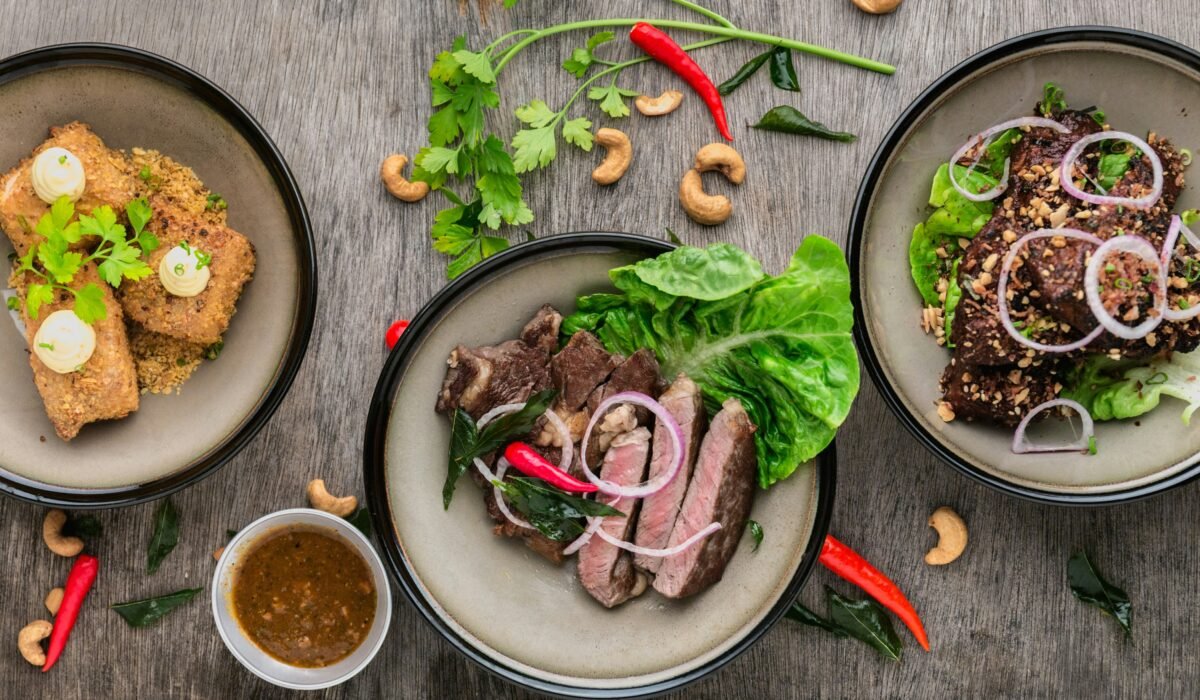
The Quick Rundown
- A balanced meal follows a simple formula: half the plate as vegetables and fruit, a quarter as lean protein, and a quarter as whole grains or complex carbs.
- Healthy fat — olive oil, avocado, nuts — is added in moderate amounts alongside those three sections.
- The three macronutrients (carbohydrates, protein, fat) each serve distinct functions. None of them should be cut out entirely.
- Real-food examples for breakfast, lunch, and dinner are included, so you can see what this looks like in practice rather than in theory.
- Balance is a pattern across the day, not a requirement that every single meal be perfect.
- Individual needs vary based on age, activity level, and health status — the plate method is a starting point, not a rigid prescription.
“Eat a balanced meal” is among the most repeated pieces of nutrition advice in existence. It shows up on health websites, school cafeteria posters, and doctor’s office pamphlets. Yet most people who hear it are left with the same quiet follow-up question: what does that actually mean?
The phrase sounds clear but can feel remarkably abstract when you’re standing in front of your fridge at 7 PM trying to figure out dinner. What counts? What proportions? Do you need to weigh food? Track calories? Give up the pasta?
The answer, fortunately, is far less complicated than the noise around nutrition suggests. A balanced meal has a clear structure, backed by well-established dietary guidelines from Harvard, the USDA, the CDC, and the NIH. This guide explains that structure, breaks down the science simply, and shows what balanced eating actually looks like across a full day of real food.
The Core Idea: What Balance Actually Means
A balanced meal is one that covers the three core food groups in the right proportions: protein, carbohydrates, and a generous amount of vegetables. Healthy fat gets added in alongside those three. That’s the foundation.
The most widely used visual framework for this is the plate method, which originated with the USDA’s MyPlate and has since been refined by nutrition experts at the Harvard T.H. Chan School of Public Health. Here’s how the plate breaks down:
- Half your plate: vegetables and fruit. Non-starchy vegetables take priority at lunch and dinner — broccoli, leafy greens, bell peppers, cucumbers, tomatoes, zucchini. At breakfast, this half is better filled with fruit or a mix of fruit and vegetables.
- One quarter: lean protein. Chicken, fish, eggs, beans, lentils, tofu, Greek yogurt, cottage cheese. The source matters — plant-based proteins bring added fiber and micronutrients that animal proteins typically don’t.
- One quarter: whole grains or complex carbohydrates. Brown rice, quinoa, whole-wheat pasta, oats, sweet potato, whole-grain bread. These are processed more slowly than refined grains, which means more sustained energy and less of a blood sugar spike.
- A small portion of healthy fat: olive oil used in cooking, a few slices of avocado, a small handful of nuts, or seeds scattered over the top. Fat is not a food group to fear — it’s a necessary component of the meal.
This is the plate method. It’s not a diet. It’s a framework for portioning a meal without needing to count anything. Most national and international dietary guidelines point toward some version of this breakdown, even if the exact language differs.
Why Each Component Matters: The Role of Macronutrients
Every macronutrient serves a specific job in the body. Cutting one out entirely — whether it’s fat, carbohydrates, or protein — creates gaps that the other two cannot fill.
Carbohydrates: The Body’s Primary Fuel
Carbohydrates are the brain and muscles’ preferred energy source. MD Anderson Cancer Center’s nutrition team puts it plainly: 45 to 65 percent of daily calories should come from carbohydrates. That’s not a small amount. The issue is not carbohydrates themselves but the type.
Complex carbohydrates — whole grains, legumes, starchy vegetables — break down slowly, delivering steady energy and a steady blood sugar curve. Simple, refined carbohydrates — white bread, pastries, sugary drinks — spike blood glucose and drop it just as fast, leaving you hungry again within the hour. The goal is not to avoid carbs but to choose the type that fuels rather than crashes.
Carbohydrates also carry fiber. The NIH recommends 14 grams of fiber per 1,000 calories consumed — and most Americans fall well short of that. Fiber slows digestion, supports gut health, lowers cholesterol, and keeps you full. A meal built on whole grains and vegetables hits that target naturally.
Protein: The Building Block
Protein does not just build muscle — it builds cell membranes, skin, hair, nails, enzymes, and hormones. It also provides a stronger and longer-lasting sense of fullness than carbohydrates, according to researchers at the NIH Office of Nutrition Research.
The standard recommendation is 0.8 grams of protein per kilogram of body weight per day for sedentary adults, rising to 1.2 to 1.7 grams per kilogram for people who exercise regularly. Distributed across three meals, this means targeting 20 to 30 grams of protein per meal is a reasonable starting point for most adults.
Where protein comes from matters. Plant-based sources — beans, lentils, tofu, tempeh, edamame — bring protein alongside fiber and micronutrients. Fatty fish like salmon adds omega-3 fatty acids. Processed meats, by contrast, carry saturated fat and sodium in amounts that erode the benefit of the protein they provide.
Fat: Not the Enemy
Fat has spent decades being misunderstood. The current consensus from NIH, the British Heart Foundation, and Harvard’s nutrition researchers is that 20 to 35 percent of daily calories should come from fat — with the emphasis firmly on unsaturated fats and a cap of under 10 percent of calories from saturated fats.
Unsaturated fats — from olive oil, avocados, nuts, seeds, and fatty fish — support heart health and reduce inflammation. They’re also essential for absorbing fat-soluble vitamins A, D, E, and K, which means a meal completely devoid of fat will limit absorption of those micronutrients no matter how many vegetables you eat. Fat also makes food satisfying. A meal without any fat tends to leave people looking for more within the hour.
Trans fats remain the clear exception: they still warrant avoidance and are found primarily in heavily processed foods with hydrogenated oils.
What a Balanced Meal Looks Like: Real Examples
Theory is useful. Actual food on an actual plate is more useful. Here is what a balanced meal looks like across breakfast, lunch, and dinner, built around the plate method.
Balanced Breakfast Examples
Breakfast often skews too far in one direction — either all carbohydrates (cereal, toast, pastries) or all protein (bacon and eggs) with almost nothing else. A balanced breakfast covers protein, a complex carb, and fruit or vegetables, with some healthy fat.
Example 1: Greek yogurt parfait with rolled oats or granola, fresh berries, and a drizzle of honey. The yogurt contributes protein and probiotics, the oats bring fiber and slow-release carbohydrates, and the berries add vitamins, antioxidants, and natural sweetness. Add a small handful of walnuts for healthy fat.
Example 2: Two scrambled eggs on whole-grain toast with half an avocado and a handful of cherry tomatoes on the side. The eggs provide protein and fat-soluble vitamins; the toast supplies complex carbohydrates and fiber; the avocado adds monounsaturated fat and potassium.
Example 3: Overnight oats made with rolled oats, Greek yogurt, chia seeds, and almond milk, topped with sliced banana and a spoonful of almond butter. This comes together the night before and requires zero morning effort — protein, carbohydrates, fat, and fiber all in one jar.
The Mayo Clinic contrasts a typical diner breakfast — eggs, sausage, and white toast — with a balanced version: half the plate as fruit, a quarter as lean protein, a quarter as whole grain. The balanced version comes in around 400 calories versus 700 for the one-note plate, with significantly broader nutrient coverage.
Balanced Lunch Examples
Lunch is where the plate method is easiest to execute. A bowl, a wrap, or a plate built around a protein-carb-vegetable structure tends to keep energy steady through the afternoon — which is the key difference between a lunch that keeps you going and one that sends you to sleep by 3 PM.
Example 1: A turkey and vegetable wrap on a whole-wheat tortilla with hummus, cucumber, tomato, and spinach. The turkey provides lean protein; the tortilla contributes complex carbohydrates; the vegetables add fiber and micronutrients; and the hummus rounds out the fat and adds plant-based protein.
Example 2: A large salad built on dark leafy greens with chickpeas, roasted sweet potato, cherry tomatoes, cucumber, and a dressing made from olive oil and lemon juice. The chickpeas deliver protein and fiber; the sweet potato adds complex carbohydrates and beta-carotene; the olive oil dressing is the healthy fat.
Example 3: Whole-wheat pasta tossed with grilled chicken, broccoli, cherry tomatoes, and olive oil. Protein from the chicken, complex carbs from the pasta, fiber and vitamins from the vegetables, and a controlled amount of fat from the olive oil. This is the kind of lunch that meal-preps well for the week.
Balanced Dinner Examples
Dinner is where most people load up on protein and neglect vegetables. The plate method flips this habit — vegetables should take up the most real estate on the plate, not the protein.
Example 1: Baked salmon with roasted broccoli, a side of quinoa, and a few slices of avocado. The salmon brings protein and omega-3 fatty acids; the quinoa is a complete protein grain that adds complex carbohydrates; the broccoli contributes fiber, vitamin C, and vitamin K; the avocado adds healthy fat.
Example 2: A chicken and vegetable stir-fry over brown rice. The base is two to three cups of mixed non-starchy vegetables — bell peppers, snap peas, mushrooms, bok choy — cooked with a small amount of sesame oil. Lean protein from the chicken, complex carbohydrates from the brown rice, and micronutrients across every vegetable in the pan.
Example 3: A lentil and vegetable curry served over brown rice with a side of sauteed spinach. Lentils are one of the most nutritionally complete plant-based foods available — they provide both protein and fiber in meaningful amounts. Paired with brown rice and spinach, this dinner easily hits all four components of a balanced plate.
The Role of Micronutrients: Why Color on the Plate Matters
Macronutrients get most of the attention, but micronutrients — vitamins and minerals — are what make long-term health possible. The CDC puts it simply: aim for a variety of colors on your plate. The pigments in fruits and vegetables are not decorative. They signal different vitamins, minerals, and antioxidants.
- Orange and yellow foods (carrots, sweet potato, mango, corn): rich in beta-carotene, which the body converts to vitamin A. Supports immune function and vision.
- Dark leafy greens (spinach, kale, broccoli): concentrated sources of vitamin K, folate, iron, and calcium. Among the most nutrient-dense foods available.
- Red foods (tomatoes, red peppers, strawberries): high in vitamin C and lycopene, an antioxidant linked to heart health.
- Purple and blue foods (blueberries, red cabbage, eggplant): contain anthocyanins, compounds with anti-inflammatory properties.
- White and beige foods (garlic, onions, cauliflower): provide allicin and quercetin, both of which support immune function and cardiovascular health.
A plate that covers three or four of these color categories in a single meal is a plate that’s covering a wide range of micronutrients without needing to track a single vitamin.
Harvard’s Healthy Eating Plate vs. USDA’s MyPlate
Two frameworks dominate the balanced meal conversation. They agree on most things but differ in a few key areas.
The USDA MyPlate divides a plate into four sections — fruits, vegetables, grains, and protein — with a small circle for dairy on the side. It’s simple and broadly applicable. The recommendation is for half the plate to be fruits and vegetables, a quarter to be grains (with at least half as whole grains), and a quarter to be protein.
Harvard’s Healthy Eating Plate, created to address what its researchers saw as gaps in MyPlate, goes a step further. It specifies that potatoes do not count as a vegetable in the vegetable section because of their sharp effect on blood sugar. It gives prominence to healthy oils (olive oil, canola oil) as part of the meal’s fat component. It also differentiates between healthy protein sources and less healthy ones — putting processed meats in a separate, limit-these category.
Both frameworks point to the same basic structure. Harvard’s is simply more precise. For most people, either one is a workable guide. The more important thing is consistent application — using some version of the plate method at most meals — rather than choosing one framework and following it perfectly.
Common Imbalances and How to Correct Them
Most eating habits tilt in one consistent direction. Knowing which direction yours tilts is more useful than reading a list of foods you should eat more of.
Too Much Protein, Not Enough Vegetables
A registered dietitian at Cleveland Clinic noted that a traditional American dinner often looks like a large portion of protein, a roughly equal portion of starch, and a small side of vegetables. The plate method inverts this entirely. Vegetables should be the largest section, not the smallest. The fix is mechanical: serve the vegetables first, fill half the plate, then add the protein and grain around them.
Refined Carbohydrates Instead of Complex Ones
White bread, white rice, and pasta made from refined flour raise blood glucose quickly and drop it just as fast. Swapping to whole-grain versions of the same foods — whole-wheat pasta, brown rice, whole-grain bread — provides the same carbohydrate satisfaction with added fiber and a slower energy release. The taste difference is genuinely mild once you’re used to it.
Skipping Fat Entirely
A meal with no fat can feel virtuous but tends to leave people hungry again within two hours. Fat slows digestion, triggers satiety signals, and is required for absorbing fat-soluble vitamins. A drizzle of olive oil on vegetables, a few slices of avocado, or a small portion of nuts rounds out the nutrition and keeps hunger at bay far longer than a fat-free plate.
No Protein at Breakfast
Most people eat the bulk of their daily protein at dinner. Breakfast tends to be almost entirely carbohydrate-based — cereal, toast, pastries. Adding 20 to 30 grams of protein at breakfast supports sustained energy, reduces mid-morning cravings, and helps with overall daily protein targets. Greek yogurt, eggs, cottage cheese, or a protein-enriched smoothie are the fastest fixes.
Balance Across the Day, Not Just One Meal
One of the clearest points that registered dietitians make consistently is that balance does not have to happen at every single meal. It happens across the day and across the week.
If lunch was a carbohydrate-heavy office pizza situation, adding extra vegetables and lean protein at dinner rebalances the day. If breakfast was light on vegetables, making them the largest component of the evening meal corrects the gap. The body does not reset at midnight. What matters is the overall pattern.
A registered dietitian quoted by GoodRx put it clearly: food is more than nutrients. It’s culture, joy, history, and connection. A hot dog at a baseball game or a slice of birthday cake does not undo a week of balanced eating. The goal is to prioritize nutrient-dense foods most of the time and make room for everything else without guilt when the occasion calls for it.
This is what makes the plate method a better framework than calorie counting or macro tracking for most people. It focuses on proportions and food quality rather than numbers, which makes it far easier to maintain across years rather than weeks.
Practical Tips for Building Balanced Meals Without Overthinking It
- Use a visual framework, not math. The plate method gives you a fast, reliable structure at every meal without a calculator. Half vegetables, a quarter protein, a quarter whole grain, and a modest amount of healthy fat. Apply that at most meals and the numbers take care of themselves.
- Build meals around a protein anchor. Deciding what the protein is first — chicken, salmon, eggs, lentils, tofu — makes the rest of the meal easier to assemble. Add a grain and pile on the vegetables from there.
- Prep vegetables in advance. The most common reason people under-eat vegetables is effort. Washing and chopping a batch of vegetables on Sunday means they’re ready to add to any meal during the week with almost no time cost.
- Swap, don’t eliminate. Brown rice instead of white rice. Whole-wheat pasta instead of refined. Greek yogurt instead of sour cream. These are low-friction changes that shift the nutritional quality of a meal without changing its character.
- Think of snacks as small balanced meals. A snack that pairs protein with fiber — cottage cheese and raw vegetables, apple slices with almond butter, Greek yogurt with berries — maintains the same structure as a full meal and keeps blood sugar stable between meals.
- Eat the rainbow across the week. No single meal needs to cover every color. Rotating through different vegetables and fruits across the week naturally builds broad micronutrient coverage without requiring any planning beyond variety.
A Full Day of Balanced Eating
Here is what a complete, realistic day of balanced meals looks like, using ordinary ingredients and no special preparation:
Breakfast
Overnight oats made with rolled oats, Greek yogurt, chia seeds, and oat milk. Topped with sliced banana, a handful of blueberries, and a tablespoon of almond butter. Protein from the yogurt, complex carbohydrates from the oats, fat from the almond butter, fiber and antioxidants from the fruit.
Mid-Morning Snack
A small container of cottage cheese with sliced bell peppers and cucumber rounds. Protein plus fiber with minimal prep and minimal cleanup.
Lunch
A large grain bowl: a base of quinoa, topped with roasted chickpeas, sliced avocado, cucumber, cherry tomatoes, baby spinach, and a dressing of olive oil and lemon juice. Plant-based protein and fiber from the chickpeas, complex carbohydrates from the quinoa, healthy fat from the avocado and olive oil, and micronutrients across every vegetable layer.
Afternoon Snack
A small apple with a tablespoon of peanut butter. Natural sugars and fiber from the apple, protein and fat from the peanut butter. Keeps blood sugar stable before dinner.
Dinner
Baked salmon fillet with a side of roasted broccoli and cauliflower, and a serving of brown rice. Protein and omega-3 fatty acids from the salmon, vitamins C and K from the broccoli, complex carbohydrates and fiber from the brown rice. Drizzle the vegetables with olive oil before roasting for the fat component.
This day covers protein, complex carbohydrates, and healthy fat at every meal. Vegetables appear at every eating occasion. No single food group is absent, and no food has been eliminated. That’s what balanced eating looks like in practice.
When Balance Looks Different: Individual Needs
The plate method is a general guide, and general guides have limits. Certain situations call for adjustments:
Athletes and highly active people need a larger carbohydrate portion and more total protein to support muscle repair and sustained energy output. The plate proportions shift — a larger grain section and a more generous protein portion are appropriate.
Adults over 50 face a higher risk of muscle loss. Research from the NIH suggests protein needs rise to 1.2 to 1.6 grams per kilogram of body weight per day, with some evidence that 30 to 40 grams per meal better supports muscle protein synthesis in older adults.
People managing type 2 diabetes need to pay closer attention to the quality and quantity of carbohydrates. The complex-over-refined principle still applies, but portion sizes of grains may need adjusting, and eating protein before carbohydrates at a meal can help blunt the blood glucose response.
Plant-based eaters can absolutely follow the plate method, but need to be deliberate about combining protein sources to cover all essential amino acids across the day and about getting adequate iron, zinc, calcium, and vitamin B12 from food or supplementation.
For anyone with a specific health condition, a registered dietitian is the right person to translate the general framework into a personalized one.
The Bottom Line
A balanced meal is not complicated. Half the plate goes to vegetables and fruit. A quarter goes to lean protein. A quarter goes to whole grains or complex carbohydrates. Healthy fat gets added in moderate amounts alongside all three.
That structure, applied consistently across most meals, covers the macronutrients the body needs, supports steady energy, promotes fullness, and builds the kind of micronutrient diversity that long-term health depends on.
The best version of a balanced meal is not the one that follows the plate method perfectly. It’s the one you’ll eat again tomorrow. Start with the proportions, choose foods you genuinely enjoy, and give the framework enough time to become a habit rather than a project.